RLRL EYERISING MYOPIA MANAGEMENT DEVICE
Myopia, or short-sightedness, is becoming increasingly common in children, making effective management and early intervention more important than ever. One emerging treatment option is Repeated Low-Level Red-Light (RLRL) therapy using the Myopia Management Device by Eyerising International.
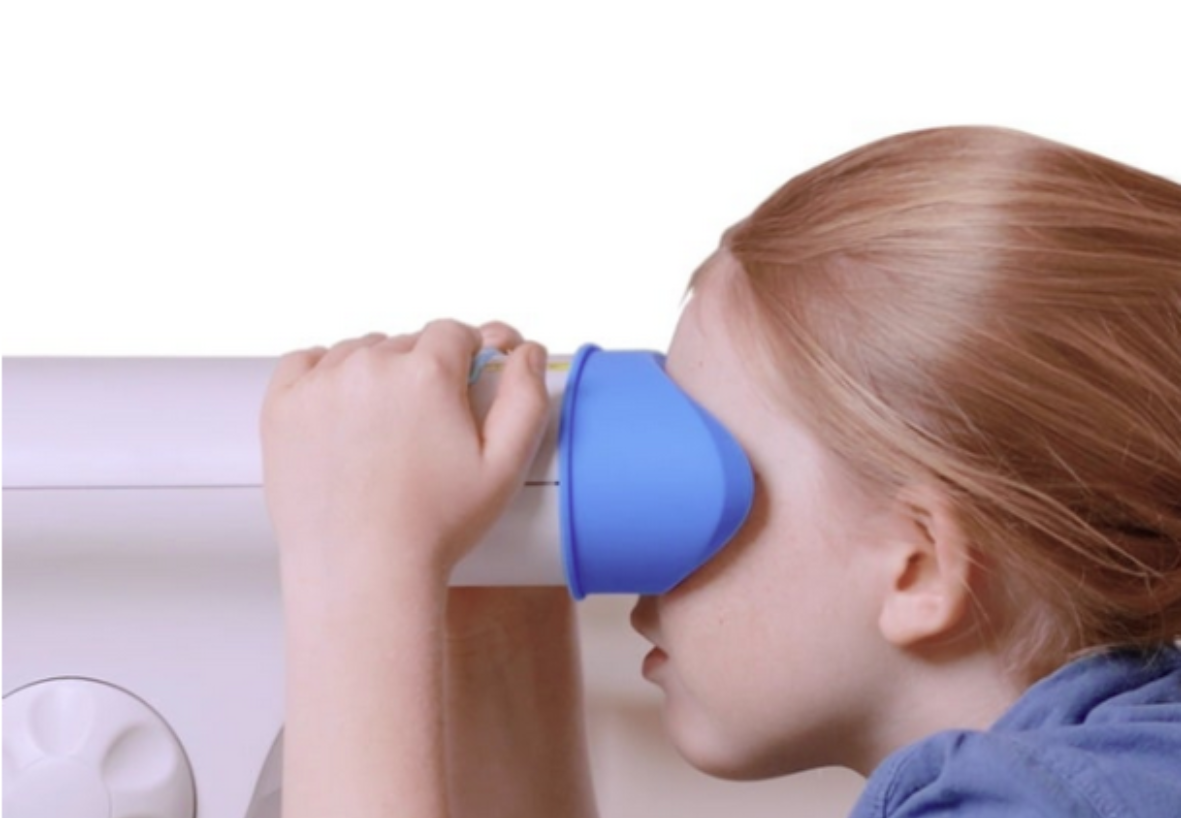
This innovative device uses low-intensity red light to help slow the progression of myopia in children. Treatments are completed conveniently at home, twice daily for just three minutes per session. Research suggests it may become an important tool in childhood myopia management.
What is Repeated Low-Level Red Light Therapy?
The Eyerising Myopia Management Device delivers visible red light to the eyes at a low intensity to support myopia control.
While increased outdoor time has long been recommended to help slow myopia progression, RLRL therapy offers a practical, time-efficient alternative for children who may not spend enough time outdoors but still require effective myopia management.
One of the major advantages of this treatment is that it can be performed conveniently in the home environment.
The Myopia Management Device by Eyerising International is conveniently used at home following a 3-2-5 treatment schedule: 3 minutes per treatment, twice daily, 5 days per week.
Researchers are still investigating the exact mechanisms behind RLRL therapy, but current evidence suggests the red light may:
-
Improve blood circulation within the eye
-
Support the health of retinal and choroidal tissues
-
Help prevent excessive elongation of the eyeball
Since myopia progression is closely linked to eye elongation, slowing this process may help reduce worsening short-sightedness over time.
How Effective is RLRL for Myopia Control?
Clinical studies have shown promising outcomes, particularly in children aged 6–12 years.
Trials have demonstrated:
Up to 75% less eye growth compared with children who did not receive the therapy
Significant slowing of myopia progression over one to two years
Potential improvement in long-term myopia management outcomes
Understanding the Research Findings
In clinical trials conducted on Chinese children who used the Myopia Management Device (twice daily, 3 minutes per session, 5 days per week) showed significantly reduced eyeball length growth compared with children who did not use the therapy.
What About Long-Term Results?
Some studies suggest that RLRL therapy may do more than simply slow myopia progression. In certain children, researchers observed a slight reduction in eye length, which could indicate additional long-term benefits.
However, researchers have also raised the possibility of a “rebound effect” if treatment is discontinued. In some cases, myopia progression may accelerate once therapy stops. For this reason, ongoing monitoring and continued guidance are important for long-term treatment success.
Is RLRL Therapy Safe for Children?
Fortunately, these events appear to be uncommon and generally resolve after discontinuing treatment.
Safety is always a key consideration, particularly for children.
Current research shows that RLRL therapy has a strong safety profile, with very few reported side effects.
Possible Side Effects
Rare side effects may include:
-
Temporary blurred vision
-
Temporary visual disturbances
-
Persistent afterimages (seeing spots or flashes)
If a child experiences an afterimage lasting longer than five minutes after treatment, therapy should be stopped and an eye-care professional should be contacted promptly.
The Bottom Line for Families
Repeated Low-Level Red Light (RLRL) therapy is emerging as a promising new option for childhood myopia management.
Its key advantages include:
-
Short treatment times
-
Convenient home use
-
Strong early research outcomes
-
Potential to significantly slow myopia progression
For families considering RLRL therapy, discussing the option with an optometrist or eye-care professional is essential. Treatment may work best when combined with other myopia management strategies such as:
-
Myopia control glasses
-
Contact lenses
-
Increased outdoor activity
As research continues, RLRL therapy may become an increasingly important tool in helping children manage myopia safely and effectively.
The Bottom Line for Families
Good vision is vital for your child’s development, both academically and in their everyday life. Don’t wait for the signs to show up – let our behavioral optometrists help you give your child the best chance at clear, efficient vision.
Published by Eyecare Kids.