
Binocular vision is the ability of both eyes to work together as a team to create a single, clear, three-dimensional image.
It’s essential for depth perception and helps us interact with our surroundings efficiently, making everyday tasks like reading, driving, and playing sports much easier.
What are Binocular Vision Disorders?
For proper binocular vision, both eyes need to align, focus, and track objects in harmony. When these processes are disrupted, it can affect the clarity and depth of the world we see, leading to challenges in visual tasks.
Binocular vision disorders can result in issues like double vision, difficulty reading, poor depth perception, and trouble with coordination.
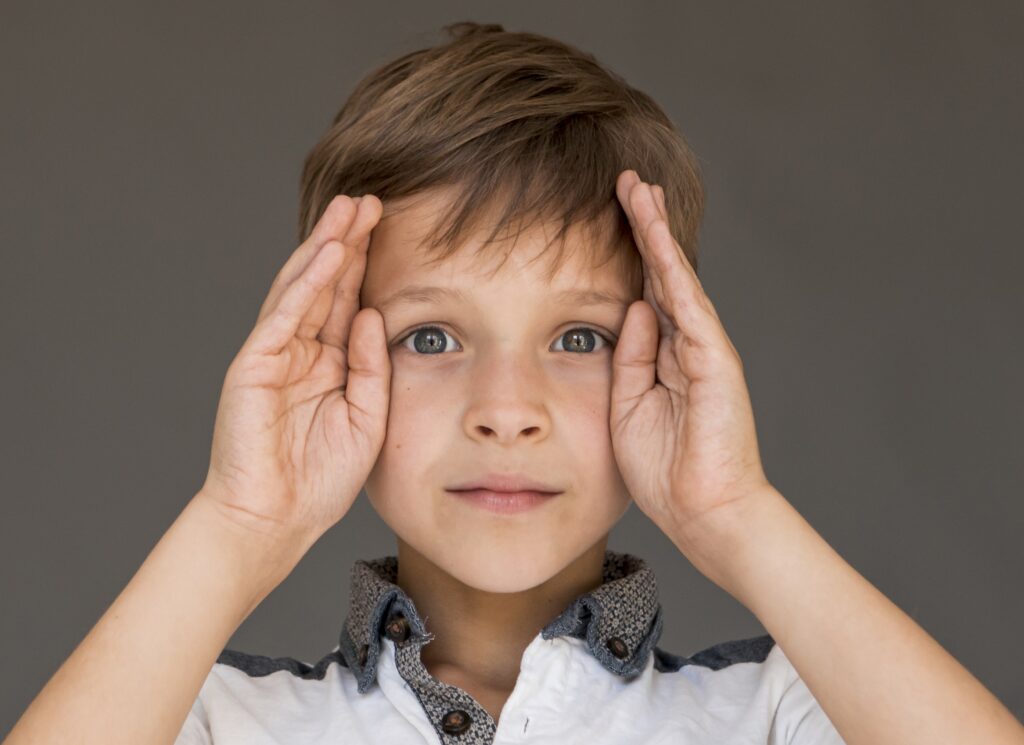
Eye Tracking
Eye tracking refers to the ability to smoothly follow and focus on moving objects with both eyes. This skill is crucial for activities like reading, sports, and general navigation of the environment.
What Happens with Eye Tracking Issues?
When the eyes struggle to track moving objects or maintain focus, it can lead to visual discomfort, difficulty following along with moving images (like in sports or reading lines on a page), and poor coordination. For example, children with poor eye tracking may find it challenging to keep their place while reading or might struggle to follow a teacher’s movements in the classroom.
Eye Teaming
Eye teaming is the ability of both eyes to work together and align properly when looking at something. Proper eye teaming is critical for clear and comfortable vision.
Convergence Insufficiency
Convergence is the ability of the eyes to turn inward and focus on nearby objects.
In convergence insufficiency, the eyes do not align properly when looking at close objects, leading to symptoms like blurred vision, double vision, or eye strain, especially when reading or doing close work. This can cause discomfort or make it hard for a child to focus on tasks such as reading, homework, or even looking at a mobile phone.
Divergence Excess
Divergence is the ability of the eyes to move outward when looking at distant objects.
Divergence excess occurs when the eyes tend to move outward too much when looking at things far away, leading to difficulty focusing on objects at a distance. This may result in double vision, eye fatigue, or trouble with tasks like sports or driving.
Eye Focusing
Eye focusing refers to the ability of the eyes to adjust quickly to different distances and maintain clear vision, whether looking at something up close or far away.
Accommodative Insufficiency
A condition where the eyes struggle to focus on near objects, such as when reading or doing close-up work.
Children with this condition may experience eye strain, headaches, or blurry vision when reading, making it harder for them to keep up in class or with homework.
Accommodative Excess
The opposite — where the eyes over-focus on nearby objects, leading to excessive eye strain or blurry vision when switching focus between near and far distances.
This can make it difficult to maintain clear vision during daily tasks, like reading or watching television.
What Happens to the Brain When the Eyes Fail to Work Together?

For the brain to process visual information correctly, both eyes need to work together. When the eyes have trouble tracking, teaming, or focusing, the brain receives conflicting or unclear information, which can make tasks like reading, writing, and sports harder.
If these issues aren’t addressed, the brain struggles to develop important skills like depth perception, coordination, and focus. This can affect a child’s learning, confidence, and everyday activities. Early treatment helps the brain get the right visual input, supporting your child’s growth and development.
Signs and Symptoms of Binocular Vision Disorders
- •
Difficulty reading or focusing on near or distant objects - •
Frequent headaches or eye strain - •
Poor hand-eye coordination or trouble with sports - •
Squinting or excessive rubbing of eyes - •
Tilting the head to focus on objects - •
Difficulty with depth perception or judging distances
- •
Complaints of blurry or double vision - •
Difficulty keeping their place while reading - •
Closing one eye to read or focus - •
Avoidance of reading or close-up tasks - •
Sensitivity to light
Why Should Parents Be Concerned?
Many children with binocular vision issues don’t know how to express that they are having trouble seeing clearly. They may not even realise that their vision is different from others. As a result, they might avoid tasks like reading, writing, or participating in sports, which can lead to struggles at school or in social settings. Early intervention is key to ensuring that any binocular vision problems are addressed before they impact your child’s development.
What You Can Do?
- •
Observe for signs like squinting, rubbing eyes, or complaints of blurry vision. - •
Schedule regular eye exams, especially for children who may not notice vision problems. - •
Encourage your child to participate in activities that help improve eye coordination, such as ball games, puzzles, or reading exercises. - •
If you notice signs of binocular vision issues, consult an eyecare professional for an assessment and early intervention. - •
Download our guide to learn more about binocular vision disorders and how to help your child.
If you suspect your child may have binocular vision problems, schedule a comprehensive eye exam with an eyecare professional. At Eyecare Kids, our optometrists have a special interest in diagnosing and managing binocular vision disorders. Early detection can prevent long-term problems and help your child achieve their best visual potential. For more information on treatment and management of binocular vision issues, please don’t hesitate to contact us.
FAQs about Binocular Vision Disorders from Parents and Guardians
Binocular vision is the ability to see with both eyes simultaneously to understand depth. Each eye captures an image, and the brain fuses these images together to give a clear single image.
Binocular vision disorders happen when the two eyes don’t work together as they should. This can lead to symptoms like double vision, headaches, difficulty concentrating, or seeing things out of focus. Common disorders include convergence insufficiency, eye teaming issues, and strabismus (when one eye turns in or out).
If your child has a binocular vision disorder, they might struggle with tasks like reading, schoolwork, sports, or even simple activities like watching TV. It can also lead to frustration or lower self-esteem if they can't see or perform tasks clearly.
The causes can vary. Some children are born with vision problems, while others might develop them due to factors like eye injuries, developmental issues, or even habits like poor posture when reading or using devices. Sometimes, there may be a family history of vision disorders.
Binocular vision problems are typically diagnosed through a series of tests performed by an optometrist/ophthalmologist. These tests include visual acuity, prescription, eye focusing, eye teaming (alignment), eye tracking, and 3D vision (stereoacuity). These tests will also see if your child is suppressing one eye.
Yes, many binocular vision disorders can be treated. The treatment might include:
- • Vision therapy: Special exercises and home activities to help strengthen the eye muscles or help improve how the brain processes the visual information.
- • Glasses: Prescription glasses to help with eye focus or eye alignment.
- • Surgery: In rare cases, surgery may be needed for conditions like strabismus.
- • Occupational therapy: Activities which improve visual-motor coordination, focusing skills, and eye-hand coordination.
- • Lifestyle habits: Proper lighting, reading posture and breaks are important to minimise eye strain. Some binocular vision disorders occur when we overuse the eye muscles.
Yes, treatment can be very effective, especially when started early. With the right care and follow-up, many children can improve their vision, reduce symptoms like headaches, and feel more confident in school and other activities.
If you suspect your child has a vision issue, it’s important to schedule an eye exam with an optometrist. Early detection and treatment can help prevent the condition from affecting their learning and daily activities. Encourage your child to take breaks when reading or doing close-up tasks, and avoid excessive screen time.
Yes, binocular vision disorders are fairly common. Many children experience some difficulty or fatigue with eye teaming or focusing but are asymptomatic. However if this issue starts to affect their learning, then it is important to get tested by an eyecare professional.
Some binocular vision problems can be prevented. Regular breaks, good lighting, avoiding holding things too close and excess screen time can prevent eye strain and eye focusing problems. However some binocular vision disorders are inherited or cannot be prevented; thus regular eye check ups are important.
Book an appointment today
If you’re concerned about your child’s vision, don’t hesitate to book an appointment with us. Our caring optometrists will guide you through every step of the process, providing personalised care tailored to your child’s needs.