Retinal photography: a simple guide for parents

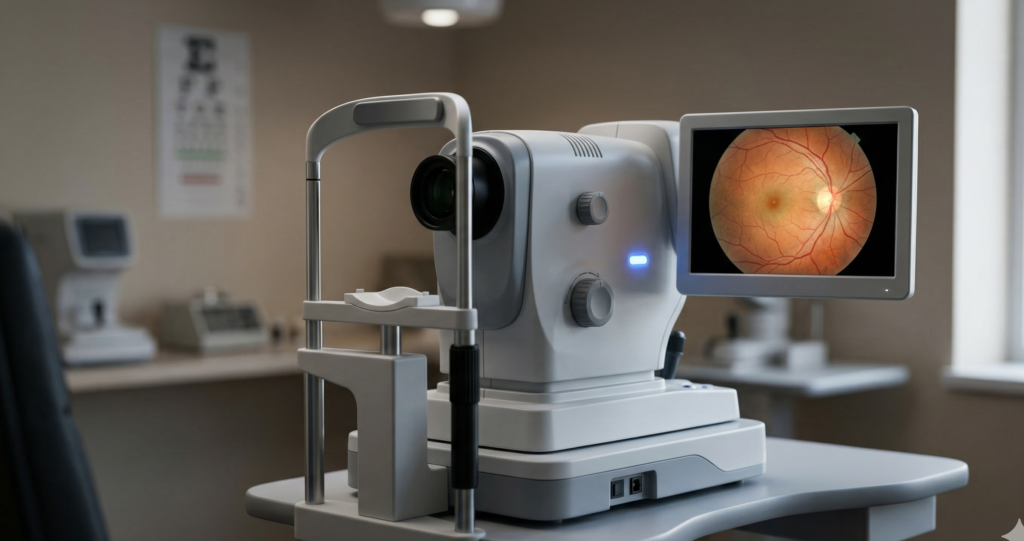
Retinal photography is an important part of modern eye examinations for children. It allows optometrists to take detailed images of the back of the eye to assess eye health, detect problems early, and monitor changes over time.

If your child has been recommended retinal photography during an eye test, this guide explains what it is, why it’s used, and what to expect.

Key points

  • Retinal photography captures detailed images of the back of the eye
  • It helps detect eye conditions early, often before symptoms appear
  • The test is safe, quick, and painless for children
  • Images can be stored and compared during future eye examinations

What is retinal photography?

Retinal photography, also known as digital retinal imaging or fundus photography, uses a specialised camera to take high-resolution images of the inside of the eye.

These images allow optometrists to examine key eye structures, including:

  • The retina, which detects light and enables vision
  • The macula, responsible for clear central vision
  • The optic nerve, which sends visual information to the brain
  • Retinal blood vessels, which supply oxygen and nutrients to eye tissues

The images provide a clear record of eye health at a specific point in time.

Why is retinal photography important for children?

Many eye conditions develop gradually and may not cause obvious symptoms, particularly in children.

Retinal photography helps optometrists:

  • Identify early signs of eye disease or structural changes
  • Monitor eye growth and conditions such as myopia (short-sightedness)
  • Track changes in the optic nerve and retina over time
  • Detect eye signs linked to general health conditions, including diabetes

Early detection supports timely treatment and long-term eye health.

What happens during retinal photography?

Retinal photography is non-invasive and suitable for children.

During the test:

  • The room is dimly lit to help the pupils widen naturally
  • Your child rests their chin on the camera support
  • They look at a small target
  • A brief flash of light is used to capture the image

The eye is not touched, and the test usually takes only a few minutes.

In many cases, pupil-dilating drops are not required. If drops are needed to obtain clear images, their effects are temporary.

Is retinal photography safe?

Yes. Retinal photography is widely used in optometry and ophthalmology and is considered safe for children.

  • No radiation
  • No pain
  • No injections
  • No lasting side effects

It is routinely performed as part of comprehensive eye examinations.

Book your child’s eye test

At Eyecare Kids, we invest in advanced diagnostic equipment to support accurate and comprehensive eye care for children.

If it’s been 12 months or more since your child’s last eye test, or you have concerns about their vision, visit your nearest Eyecare Kids practice to book an appointment.

How often should retinal photography be done?

How often retinal photography is recommended depends on your child’s eye health and individual risk factors.

  • Children with healthy eyes: typically once every 12 months as part of a routine eye test
  • Children with myopia or other eye conditions: imaging may be recommended more frequently

Your optometrist will advise the most appropriate schedule for your child.

Book your child’s eye test

At Eyecare Kids, we invest in advanced diagnostic equipment to support accurate and comprehensive eye care for children.

If it’s been 12 months or more since your child’s last eye test, or you have concerns about their vision, visit your nearest Eyecare Kids practice to book an appointment.

References

  1. Optometry Australia. Clinical guidelines and position statements on retinal imaging and comprehensive eye examinations.

  2. Royal Australian and New Zealand College of Ophthalmologists (RANZCO). Guidance on fundus examination and retinal imaging.

  3. American Academy of Ophthalmology. Fundus photography and retinal imaging overview.

  4. National Eye Institute. Retinal imaging and eye health education resources.

  5. World Health Organization. Eye health and early detection of vision impairment.

Leave a Reply

Your email address will not be published. Required fields are marked *

Fill out this field
Fill out this field
Please enter a valid email address.
You need to agree with the terms to proceed